
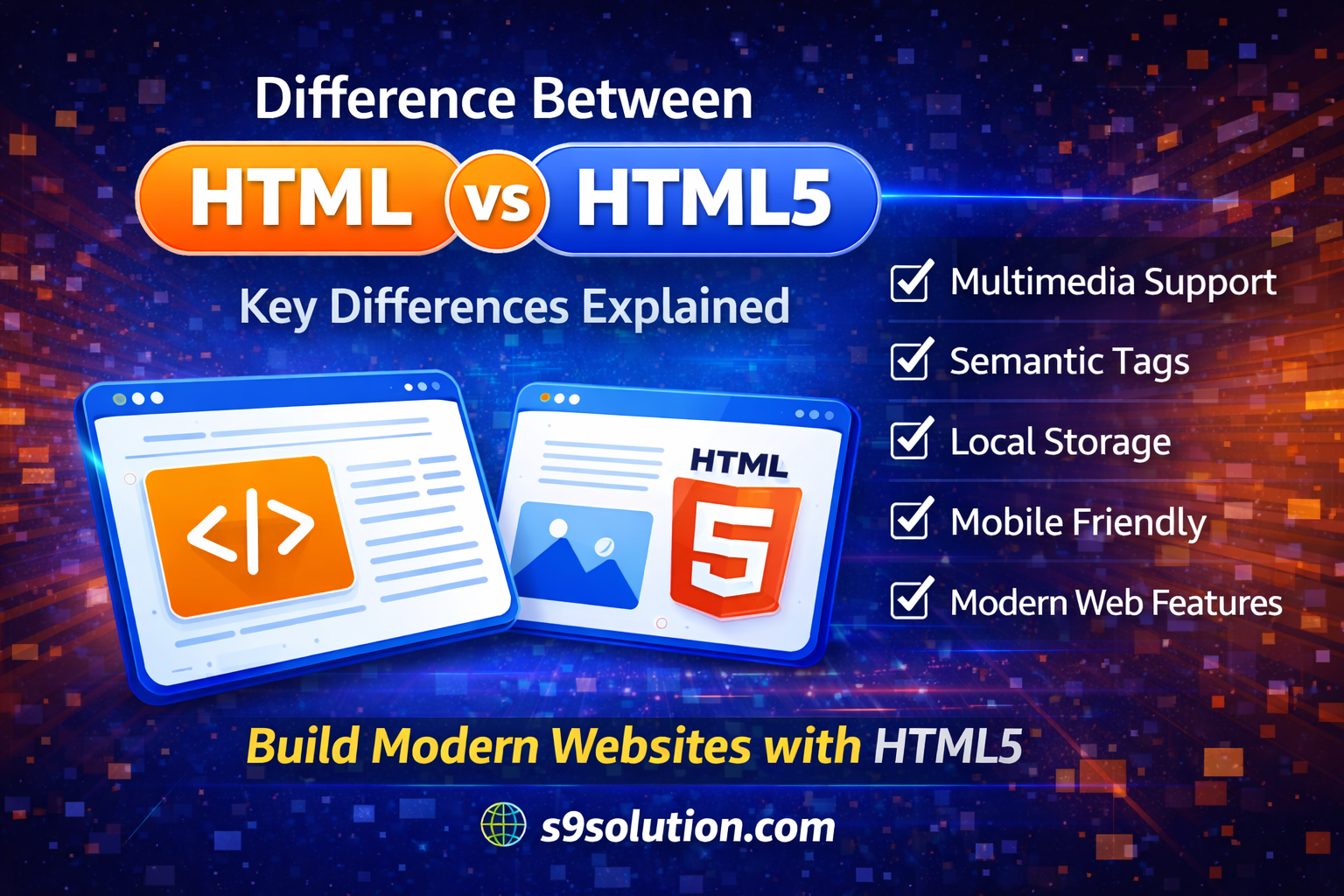
In the world of web development, HTML and HTML5 play a crucial role in creating and structuring web pages. HTML has been the backbone of the internet for many years, while HTML5 is the modern version that introduced powerful features for building interactive and multimedia-rich websites.
Understanding the difference between HTML and HTML5 is essential for developers, designers, and businesses looking to build modern websites.
🔥 What is HTML?
HTML stands for HyperText Markup Language. It is the standard language used to create web pages and structure content on the internet.
HTML allows developers to define elements such as:
- Headings
- Paragraphs
- Images
- Links
- Tables
Earlier versions of HTML required external plugins like Adobe Flash Player to display multimedia content such as videos and animations
🔥 What is HTML5?
HTML5 is the latest version of HTML designed to improve the functionality of modern websites and web applications.
HTML5 introduced many new features such as:
- Native audio and video support
- Better multimedia handling
- Improved form elements
- Semantic tags for better SEO
- Mobile-friendly features
HTML5 makes websites faster, more interactive, and easier to maintain.
Key Differences Between HTML and HTML5
| Feature | HTML | HTML5 |
|---|---|---|
| Multimedia Support | Requires plugins like Flash | Built-in audio and video support |
| Semantic Tags | Limited tags | New tags like <header>, <footer>, <article> |
| Storage | Uses cookies | Supports local storage and session storage |
| Graphics | Needs external tools | Supports <canvas> and SVG |
| Mobile Support | Limited | Designed for modern mobile devices |
💡 Advantages of HTML5
HTML5 offers several benefits compared to older HTML versions:
1. Better Multimedia Support
HTML5 allows developers to embed videos and audio directly using <video> and <audio> tags without third-party plugins.
2. Improved Website Performance
HTML5 reduces the need for external scripts and plugins, making websites faster.
3. Mobile Friendly
Modern websites built with HTML5 work better on smartphones and tablets.
4. Better SEO Structure
Semantic elements like <section>, <article>, and <nav> help search engines understand content better.
🚀 Why HTML5 is Important for Modern Websites
Today, most modern websites and web applications are built using HTML5 because it provides better performance, security, and flexibility.
Technologies like JavaScript, CSS3, and frameworks such as Bootstrap work seamlessly with HTML5 to create responsive and dynamic websites.
👨💻 Conclusion
Both HTML and HTML5 are essential technologies for building websites, but HTML5 offers advanced features that make web development easier and more powerful. With built-in multimedia support, improved performance, and better compatibility with modern devices, HTML5 has become the standard for developing modern websites.
If your business wants a modern, responsive, and SEO-friendly website, upgrading to HTML5 is the best choice.
S9 Solution specializes in professional Website Development and Digital Marketing services, helping businesses build modern, high-performance websites using the latest technologies.
